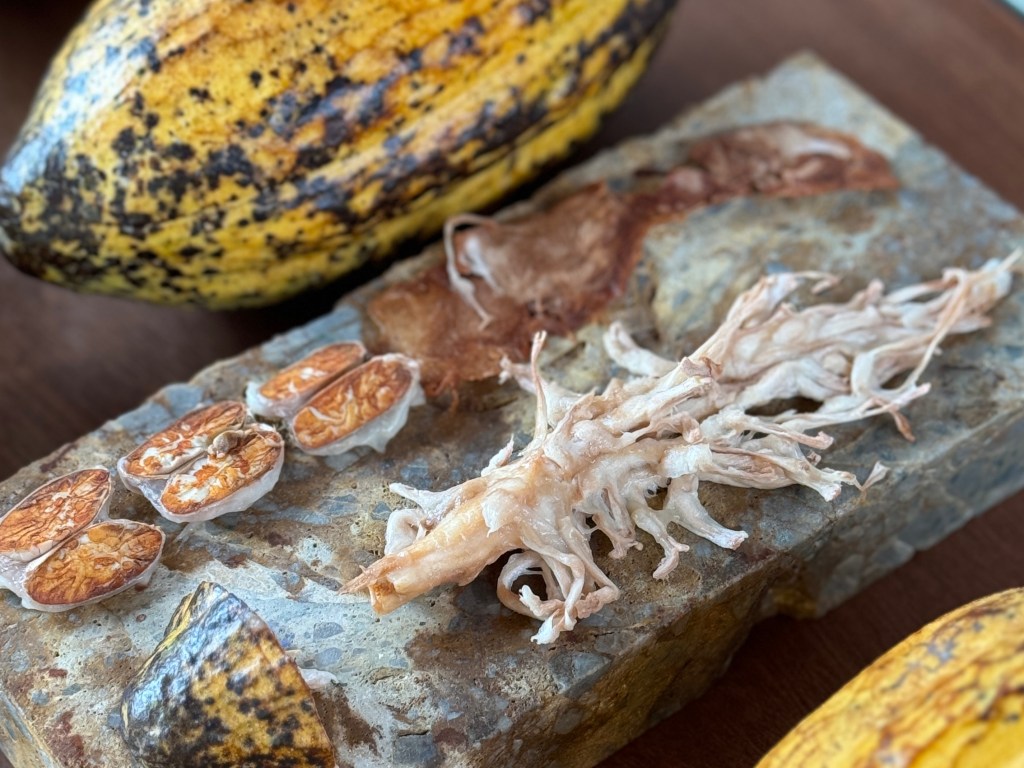
Renato Gordillo kick-started Renacer during the pandemic back in 2020.
His idea was to turn classic Peruvian chocotejas into something extraordinary. So Renacer was born.
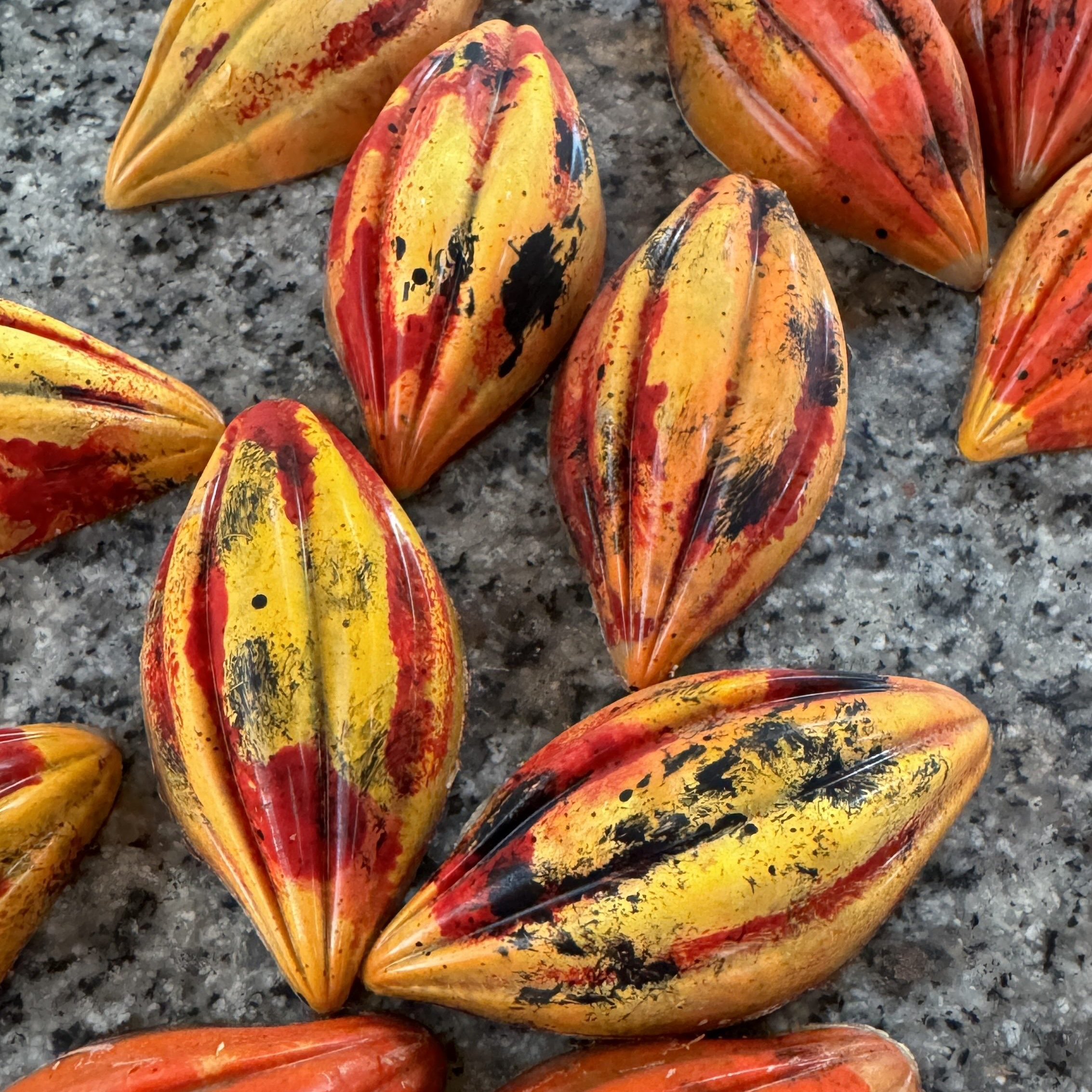
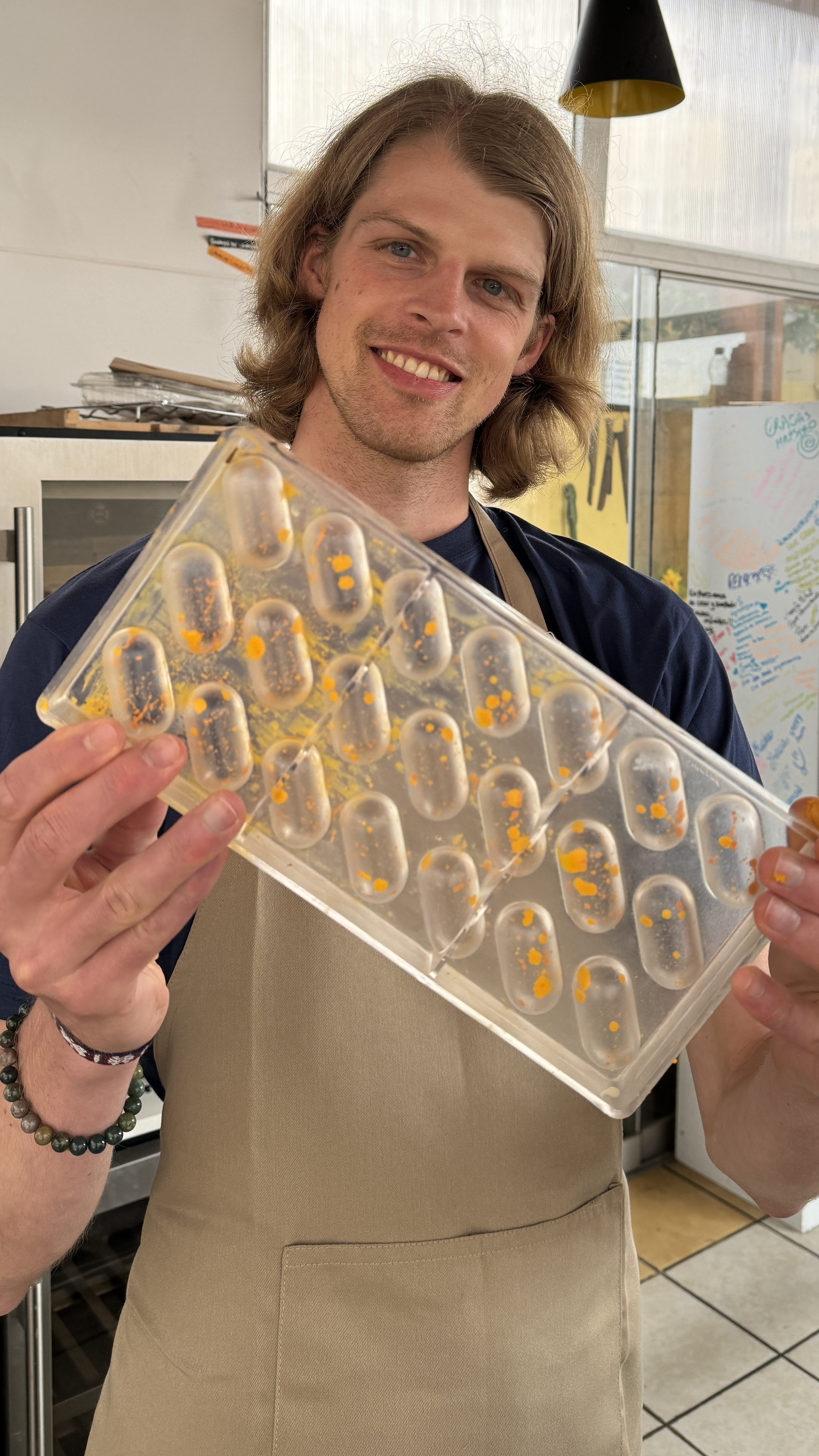
I filmed with Renato twice for the documentary, but never had the chance to get creative with chocolate bonbons myself. I was itching to give it a go!
Renato works with his aunt Jacqui. The workshop is based in the north of Lima in Jesús Maria.
The two of them run the production as well as masterclasses. The one Renato designed on this occasion was based on Theobroma. It would not only cover cacao but also Macambo (one of 22 varieties in the Theobroma family).
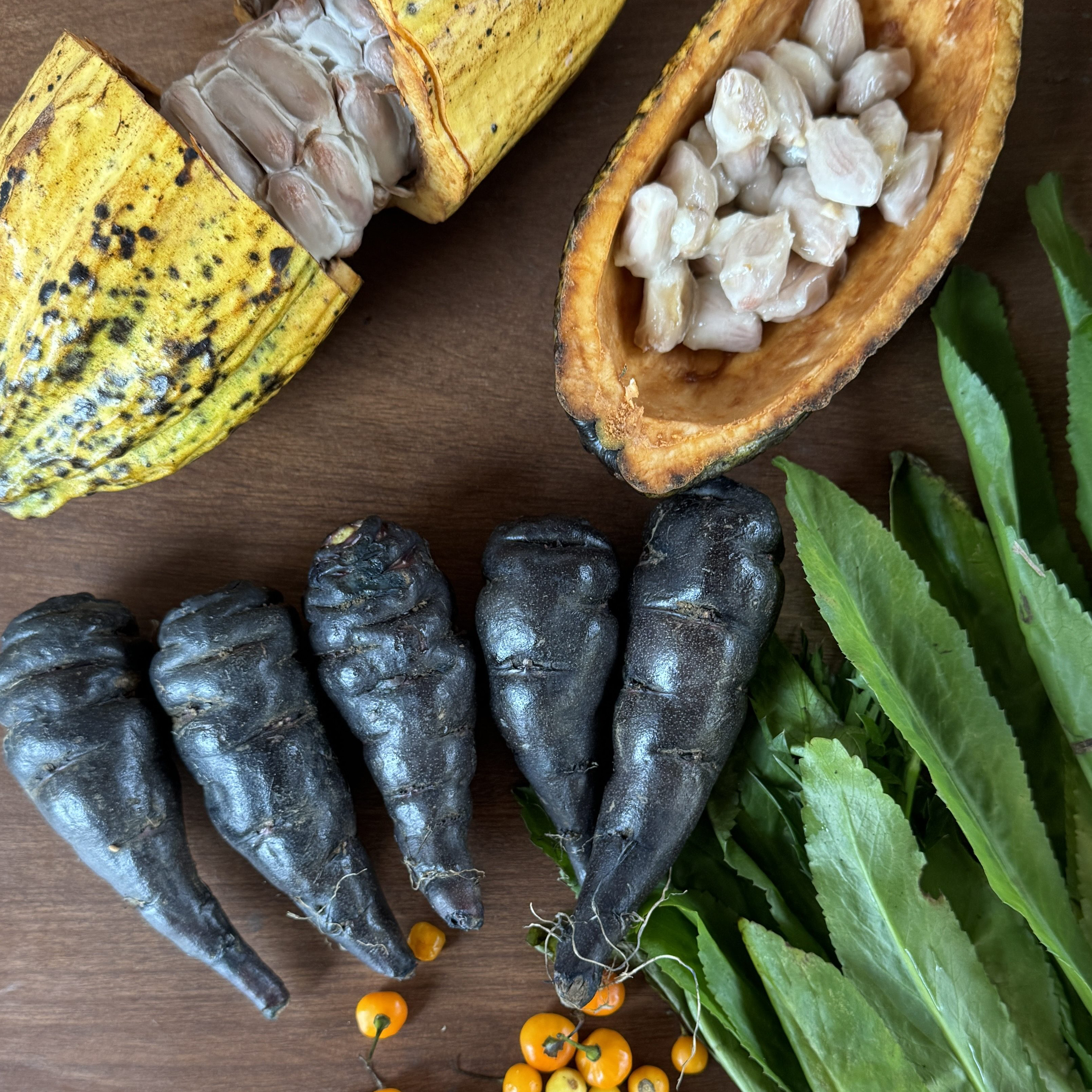
The brief:
- First Bonbon – inspired by Piura using citrus fruit
- Second Bonbon – banana caramel ganache and a type of cilantro with chilli
- Third Bonbon – Andean black potato and cheese
The last one was a new recipe and sounded simply incredible.

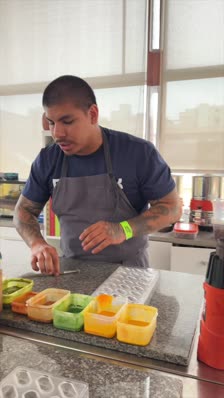
Part one, painting the moulds. This is possibly the most fun bit of the process.
All of the colours are natural and based on cacao butter. You’ll only want to add a tiny bit to your moulds as the outer layer gets too thick otherwise.
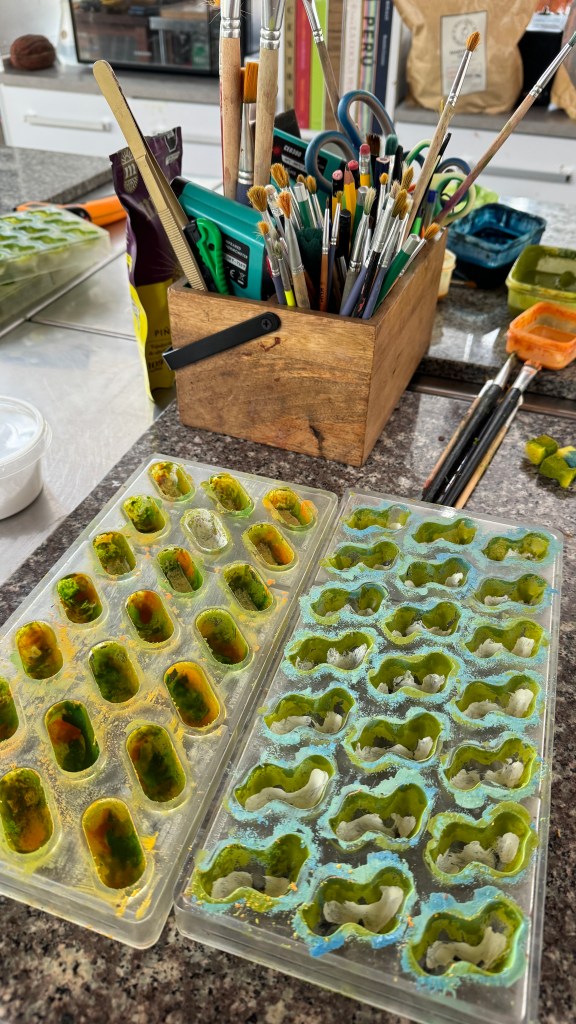
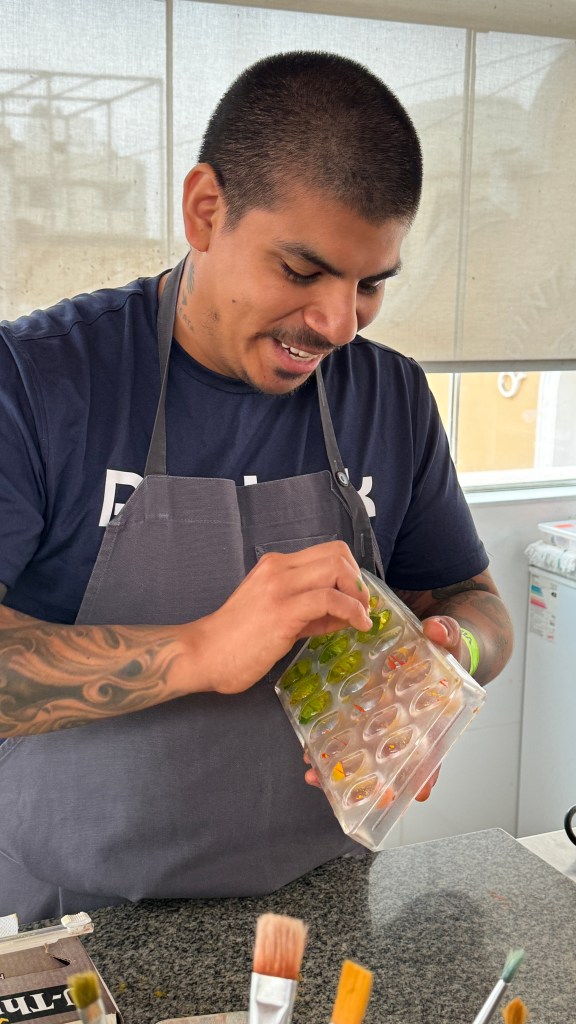
Once the paint job is done and the cacao butter is solid, the next step is to add the couverture. It’s time to temper the chocolate! Like Renato is demonstrating below, your entire body has to move. If you’re a boxer this will be a piece of cake for you.
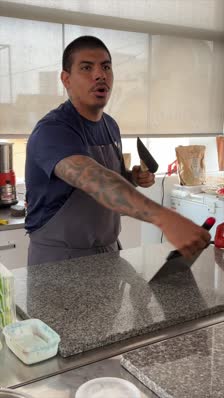
Dark chocolate, which is what we used needs to be melted at 45-50° then cooled down to 28/29° with the tempering process and then reheated to 30/31°.
Why do we need to temper? So that the chocolate has a great shine and snap to it. It also keeps it from melting in your hands easily. Simply put it stabilises the molecules.
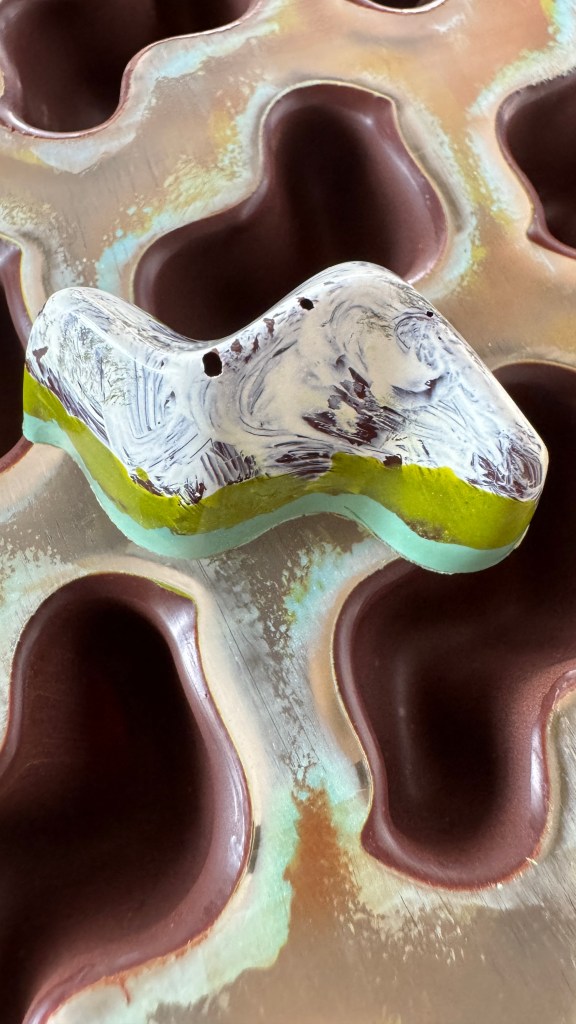
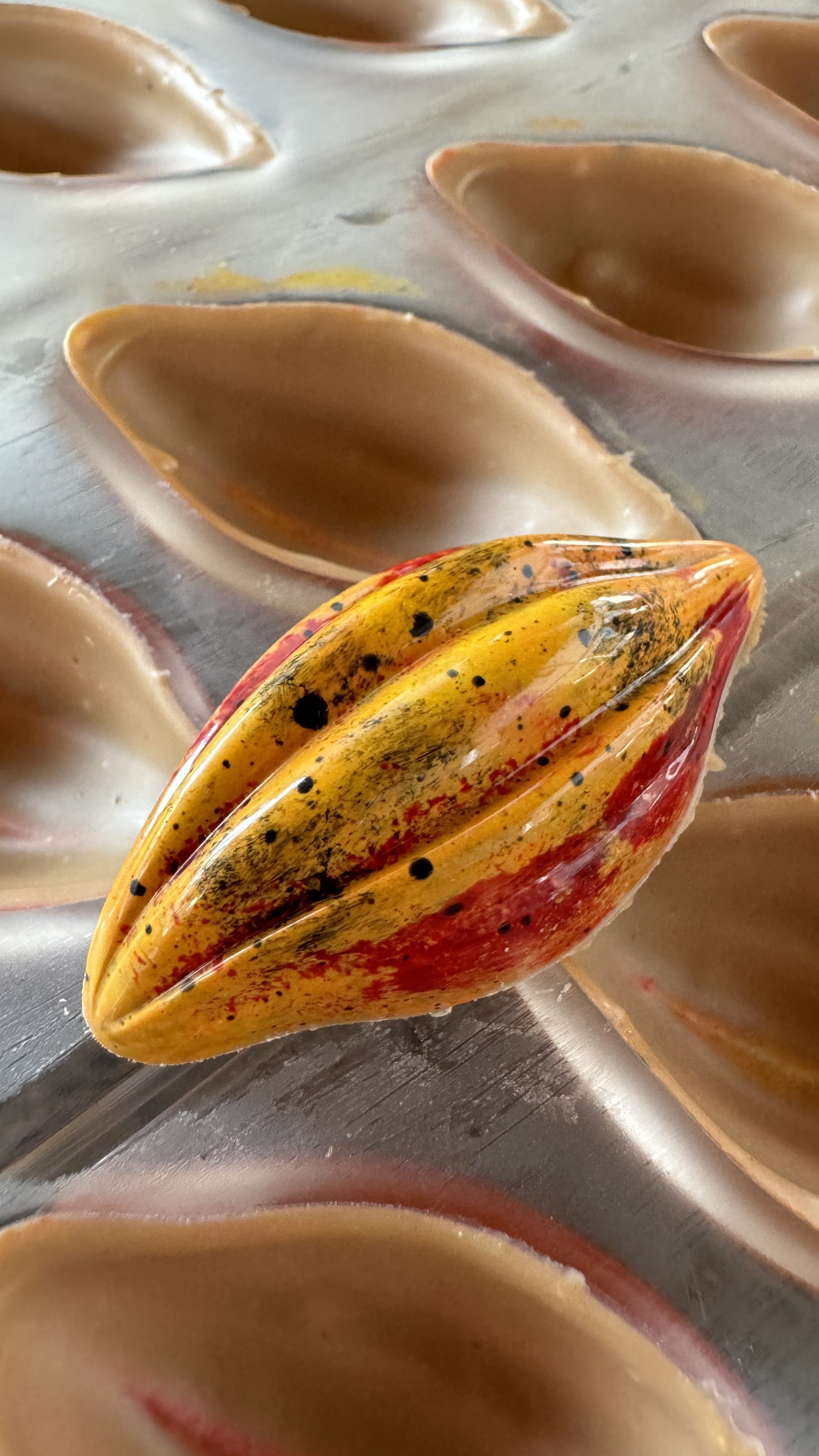
Chocolate couverture for our Andean Cheesecake mountains on the left and Macambo for our banana caramel and chilli bonbon on the right.
Check the video below on how to fill your moulds with couverture correctly.
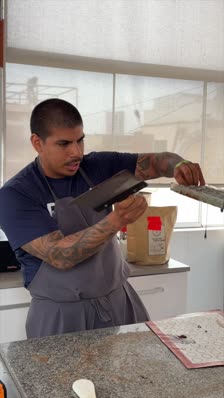
For the final part Renato had most of the fillings prepped already.
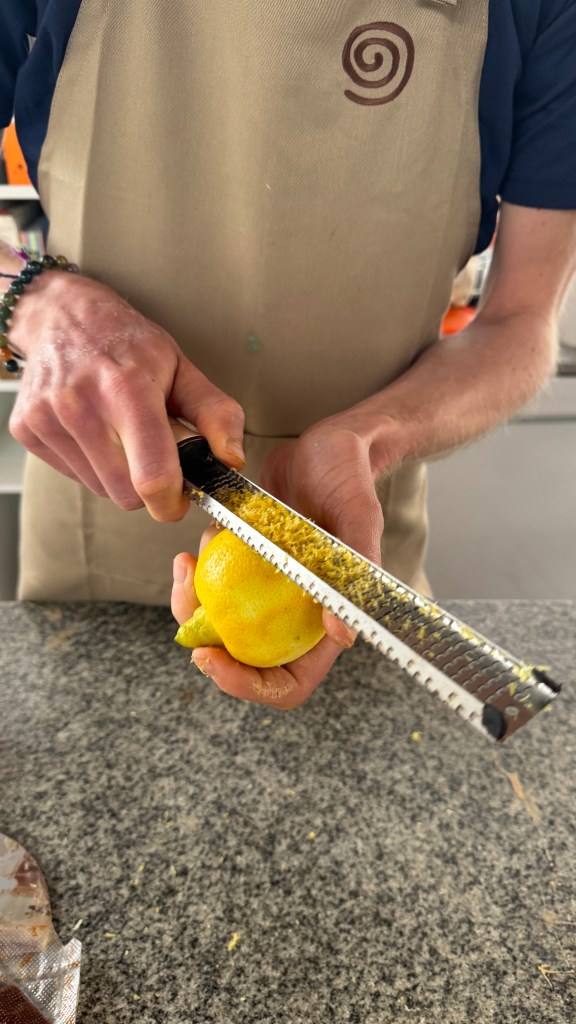
However in the case of our Piura bonbons we mixed it just before piping. Here we used glucose and incorporated a lot of lemon and lime zest. Piura is known for citrus fruit and the best limes for ceviche come from up north.
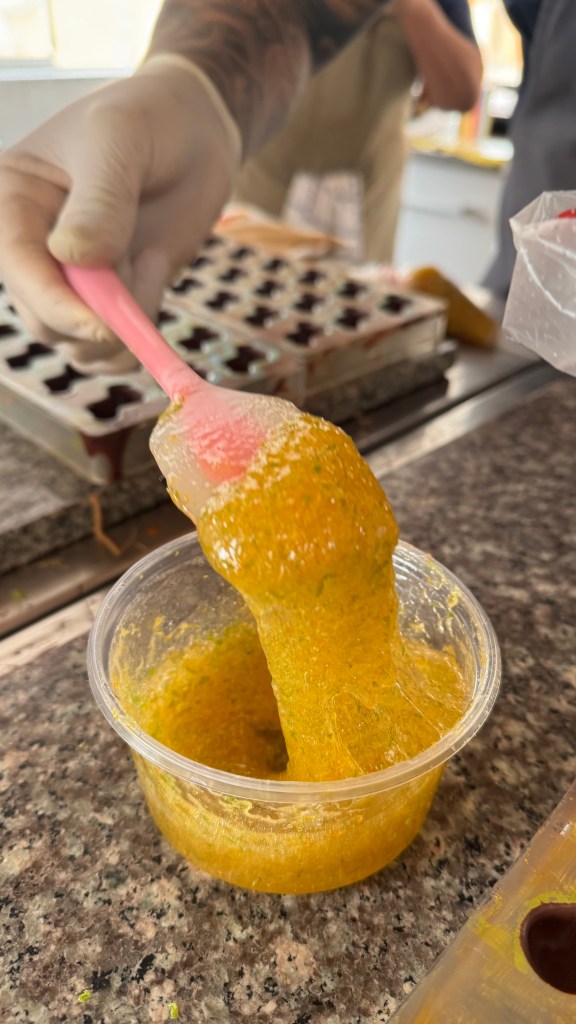
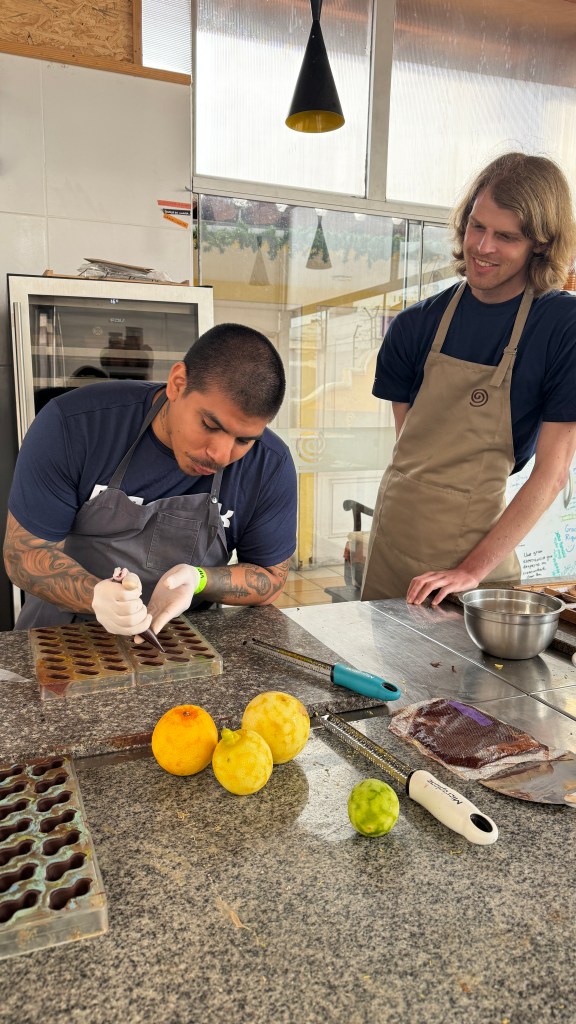
After piping it into the moulds we topped it with vegan chocolate ganache. Give it some time to set in the freezer and you’re another step closer to eating your creations.
Sealing the bonbons would be the final act before de-moulding.
To de-mould your bonbons, give your shape a twist and then let them spill out by gently dropping the mould forward.
They keep for about 2 weeks in the fridge and 1 month in the freezer.
From start to finish here’s a 48s sum-up of making bonbons. The entire process was very relaxing and a lot of fun. Best of all is the smell of chocolate that surrounds you. Pure bliss!
 Robin Metzler
Leave a comment