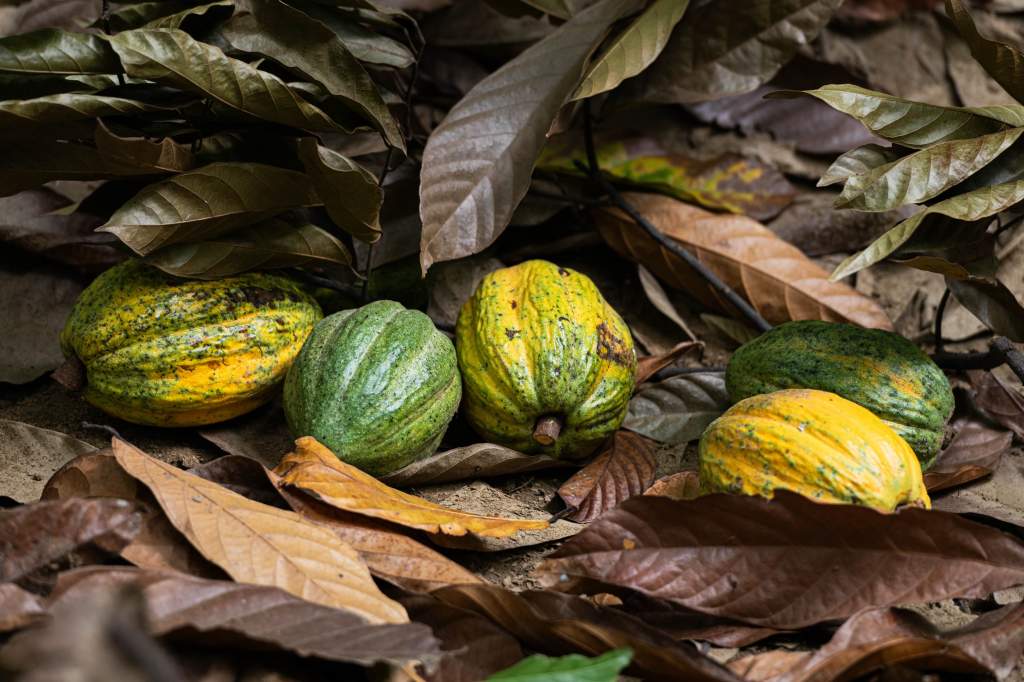
It’s exactly one year ago that Sonya and I travelled to Peru to screen the cacao film. For that reason I thought it might a good time to write more about this precious white variety.
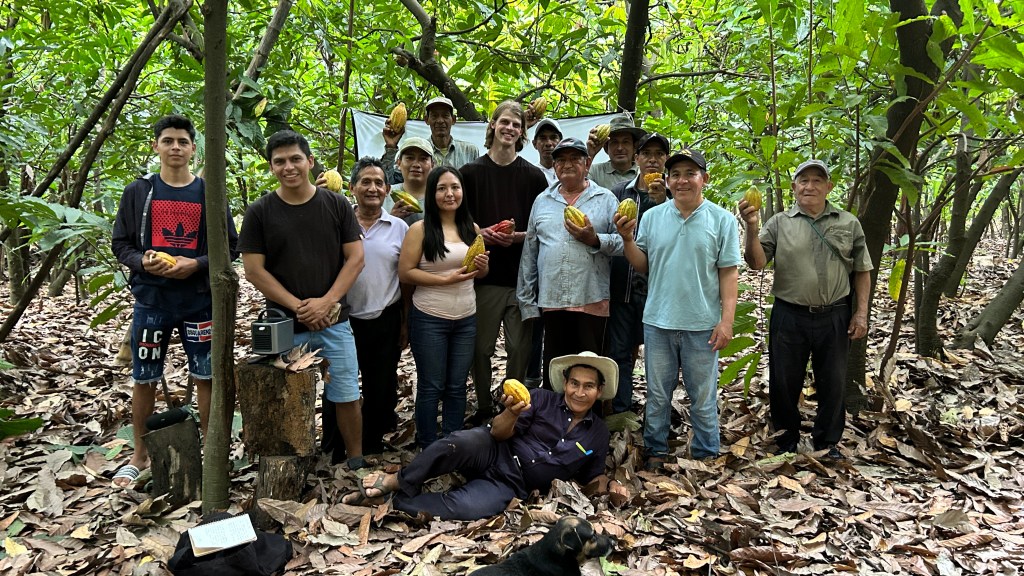
So what exactly is an albino cacao? How is this one in Piura so unique, or is it?
In addition to the documentary I would like to delve a little deeper and share more about what I learned. As it turns out there are more albino cacaos out there.
When I first started researching this project I was looking for a unique angle. Cacao in itself is a fascinating topic. It’s possibly even more complex than coffee. My last short film focused on coffee in Myanmar.
Therefore exploring cacao was only a matter of time. Coming across articles of a rare and almost extinct albino variety in Peru naturally piqued my interest. My spidey senses for a good story started tingling.
I got in touch with Original Beans, who sell Piura Blanco bars and couverture here in Europe and was put in touch with Jan Schubert known as the cacao collector on Instagram. His work is driven by supporting the farmers and cacao conservation as a whole. Considering the impact of climate change it’s very important work.
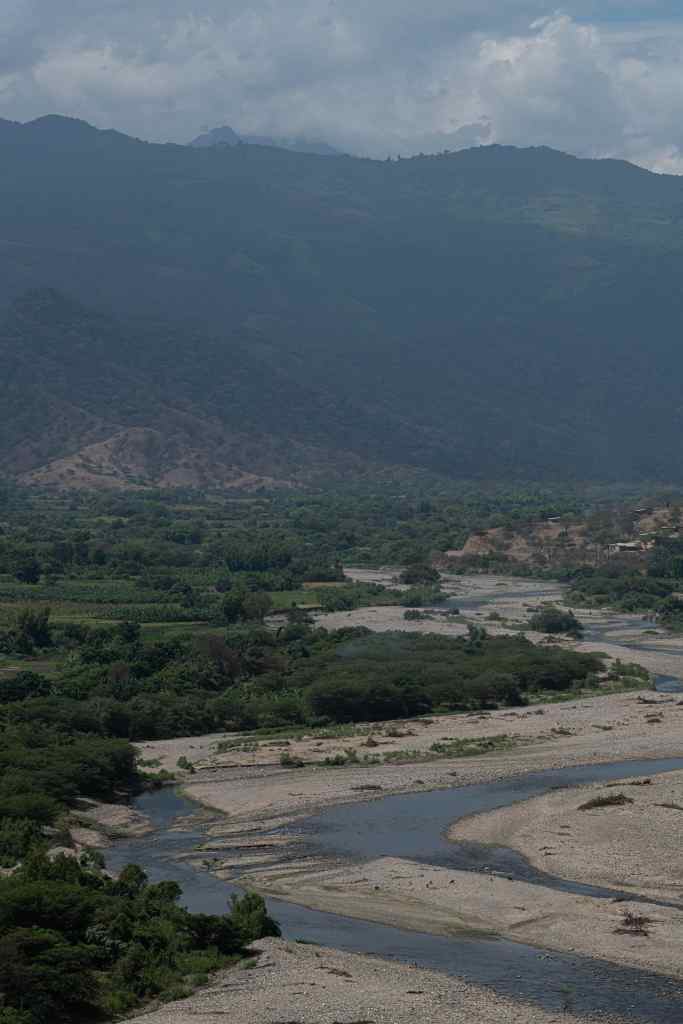
The north of Peru, where the Piura Blanco cacao grows is very arid and desert like. Most of the produce grown in the area is citrus fruit, coconuts and bananas. FYI, the best limes for ceviche come from Piura.
Due to the high temperature it can be a challenge to ship the dried cacao beans from the post harvest facility to the local export company. The amount of moisture in dry beans should be 7%. If the bags are not packed properly in the truck or too many are stacked on top of one another the beans can easily break.
Out of 12 months it only rains for about 31 days in a year. Sometimes there’s so much rain that the river bursts its banks and entire areas are flooded. Cacao farms are affected as well. It is one of the many impacts of climate change. The other extreme is long dry spells. However cacao trees can survive up to 3 months without any rain.
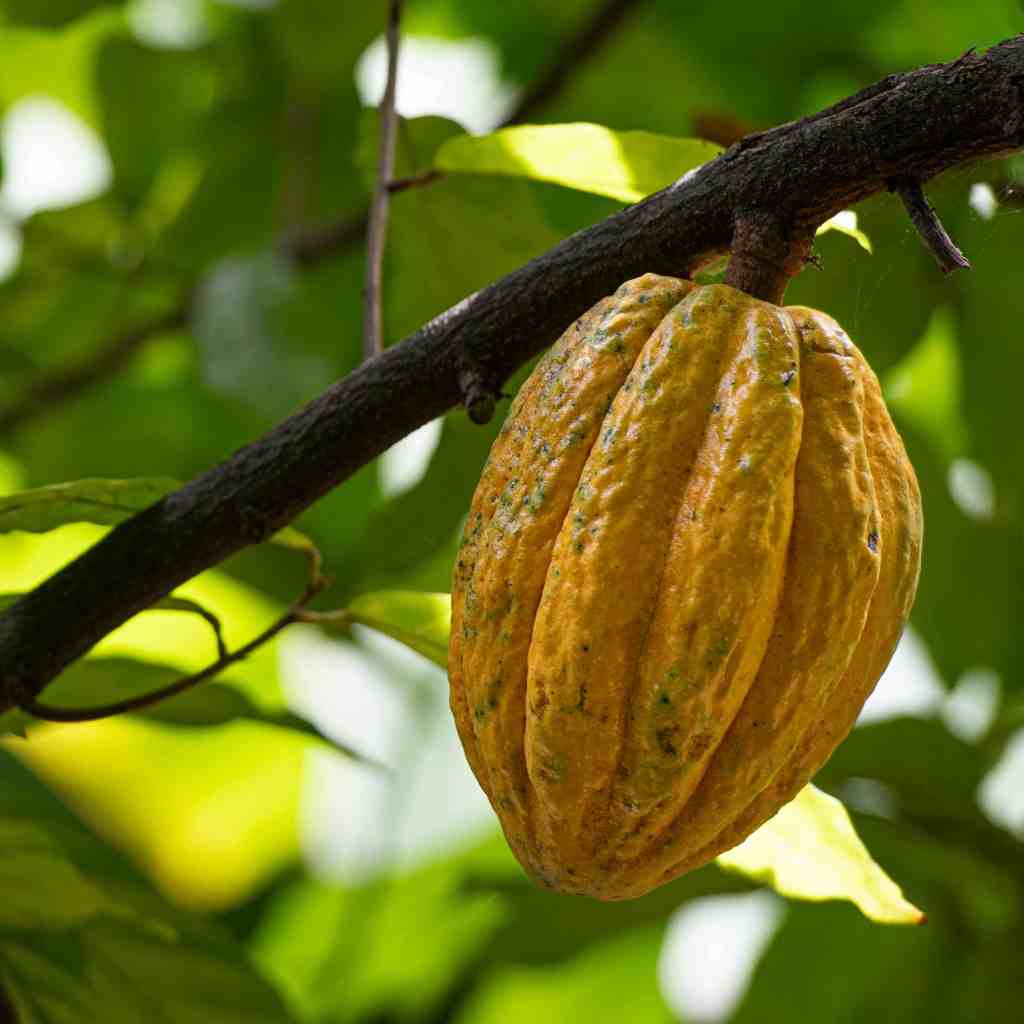
How many pods can be harvested from one tree depends on both age and size. A very old Piura Blanco tree can easily yield 300 pods a year. About 30 pods equal 1 Kg of dry beans. 10Kg of dry beans will make about 10Kg of delicious 75% Piura Blanco chocolate.
Jan told me that Piura Blanco cacao amounts to about 100 tons a year. That seems like a lot, but it isn’t. On a global scale that’s 100 tons of Piura Blanco cacao versus 4 million tons from all other parts of the world. In Peru alone Piura Blanco amounts to only 0.007% of the country’s total cacao harvest.
For that reason it simply remains one of the rarest cacao varieties. It is the only one in addition to Cuncho cacao that is available in commercial volumes.
If you happen to get your hands on a bar of Piura Blanco or visit any of the restaurants in the film you can count yourself truly lucky to enjoy a taste of Piura Blanco cacao. The flavour is very acidic, naturally sweet and tastes of raspberries or other citrus fruit. It all depends on the farm, terrain and post processing. Not one cacao variety ever tastes the same.

When conducting tests during the fermentation process, known as control de calidad (also later with dry beans) you might have noticed that some beans are purple and some are pure white. Having a harvest of pure white beans is a sheer impossibility. When visiting Joe on my last visit they achieved 87% of pure white beans, which is very high.
So why are some beans purple and some white in the pod?
It’s called cross pollination. In simple terms, each bean is an individuum and can have another father (meaning another tree) and Piura Blanco as a landrace has about 50% white beans and 50% purple beans.
Only the selection done by Norandino, APPCacao and Original Beans has 100% white beans.
Other interesting facts
- Piura Blanco was first put on the map in 2008
- 500 small holder farmers grow Piura Blanco in the Piura Valley
- Fermentation is 6-7 days and temperatures need to reach 50° Celsius
- Squirrels love cacao and are called mono (monkey) because they are the bane of cacao farmers
This should give you a pretty good idea why some cacao such as the Piura Blanco is worth the asking price. It’s definitely not the most expensive one out there.
What about other albino cacaos? During my research I have tried two other ones. Whilst travelling through Cusco we had the chance to get our hands on an albino Cuncho from Pumatiy. In Barcelona last year Cacao Sampaka sold a Mexican albino cacao. Both were exceptional. My personal favourite will always be from Piura.
What makes it special (to me) goes beyond the white beans. It’s yes the flavour and also the people who cultivate it in conditions as harsh as Siberia.
I hope you found this article interesting and learnt a bit more about cacao. Let me know your thoughts.
Thank you for reading and until next week.
Robin
 Robin Metzler
Leave a comment